 ultimate-guide
Sustainable Clothing: The 2026 Ethical Shopping Guide
Table of Contents
- What Sustainable Clothing Actually Means in 2026
- Sustainable Fashion Materials: What to Look For and What to Question
- Clothing Brand Sustainability Ratings: How They Work and How to Read Them
- How to Buy Sustainable Clothing Without Falling for Greenwashing
- Finding Sustainable Clothing Brands That Fit Your Budget
- Building a Sustainable Clothing Habit That Lasts
- Conclusion: Hold Brands Accountable, One Purchase at a Time
- Frequently Asked Questions
Last Updated: October 15, 2026
What Sustainable Clothing Actually Means in 2026
Sustainable clothing is clothing produced in a way that reduces harm to people and the planet across its full lifecycle, from fibre growth to disposal. That definition has hardened over the past few years. It is no longer enough for a garment to be "eco-friendly" in marketing copy. At Ethical Brand, we assess products against five factors: Quality, Value, Social, Economic, and Environmental impact. A T-shirt made from organic cotton but stitched in a factory with unsafe conditions does not pass that test, and neither does a fair-wage garment shipped in plastic from the other side of the world.
The 2026 shift is one of scrutiny. Regulators in the UK and EU are tightening rules on green claims, and shoppers have become far less patient with vague promises. Terms like "conscious" and "planet-positive" now invite scepticism rather than trust. That is healthy. The question worth asking about any garment is simple: can the brand prove what it claims?
Here is what most guides get wrong. They treat sustainability as a single label you either have or lack. In practice, it is a spectrum, and your job is to work out where a brand sits on it. Below, we break down the materials, the ratings, the red flags, and the shopping habits that separate genuine progress from clever marketing.
Sustainable Fashion Materials: What to Look For and What to Question
Material choice is the most visible sustainability signal, which is exactly why it attracts the most spin. Some fibres carry a genuinely lower impact. Others wear a green label while hiding a dirty supply chain.
Fibres With a Credible Lower Impact
Organic cotton is grown without synthetic pesticides and uses less water than conventional cotton. Linen comes from flax, a hardy plant that needs little irrigation and few chemicals. Recycled wool and recycled polyester divert existing textiles from landfill, though recycled polyester still sheds microplastics when washed. Tencel and other lyocell fibres, made from wood pulp in a closed-loop process, recover most of the solvent used. Hemp grows fast, suppresses weeds, and improves soil health.
None of these is perfect. The point is that each has a documented reason for a lower footprint than the mainstream alternative it replaces.
Materials That Often Get Mislabelled as Green
Vague terms do a lot of work in fashion marketing. Watch for these:
- "Bamboo" without a processing detail. Raw bamboo is a fast-growing grass, but most bamboo fabric is viscose, made through a chemically intensive route. Only closed-loop lyocell bamboo earns the green claim.
- "Biodegradable" on a polyester blend. A garment is only biodegradable if every fibre in it is, and blends rarely are.
- "Natural" as a synonym for sustainable. Conventional cotton is natural and pesticide-heavy.
- "Recycled" with no percentage. A garment with 5% recycled content is not a recycled garment.
The lesson is consistent: a material claim without a process behind it is marketing, not evidence.
Clothing Brand Sustainability Ratings: How They Work and How to Read Them
Clothing brand sustainability ratings are third-party or proprietary scoring systems that assess a brand's environmental and social performance against defined criteria, then publish the result as a grade, score, or badge. They exist because self-reported brand claims are close to worthless on their own.
What a Credible Rating System Measures
A rating worth trusting looks at more than one dimension. The strongest systems examine:
- Environmental impact: emissions, water use, chemical management, and waste across the supply chain
- Social impact: worker wages, factory safety, and labour rights
- Economic and value factors: whether a product is priced fairly for what it delivers
- Evidence trail: whether the brand can show documentation, not just a statement
Ethical Brand's QVSEE™ rating engine scores products across Quality, Value, Social, Economic, and Environmental impact, and it keeps an evidence trail behind every score. That last part matters. A rating you cannot interrogate is only slightly better than the brand's own advertising.
Ratings also change. A brand that improves its factory conditions should see its score move, and one that slips should too. Look for systems that update when practices change, and that let you track the brands you already buy from.
How to Buy Sustainable Clothing Without Falling for Greenwashing
Buying sustainable clothing without falling for greenwashing comes down to verification: you check the claim against evidence before you pay, not after. Greenwashing thrives on ambiguity, so your defence is specificity.
Red Flags to Check Before You Pay
Run through this list at the point of sale, whether you are in a shop or on a website:
- A vague claim with no detail. "Eco-friendly" and "green" mean nothing without a named standard or certification.
- No supply chain information. If the brand cannot name where the garment was made, it cannot vouch for how.
- A single badge doing all the work. One logo on the label does not certify the whole product.
- A "sustainable" collection from a fast-fashion giant. A green capsule line alongside a high-volume core business is a contradiction, not a solution.
- No way to verify. If there is no report, no rating, and no documentation, you are being asked to take it on faith.
The UK Competition and Markets Authority guidance on environmental claims sets out what businesses must be able to substantiate when they make green claims. If a brand's language would not survive that standard, treat it as noise.
A common mistake is trusting the label over the receipt. The label is written by the seller. The evidence is what you should be buying on.
Finding Sustainable Clothing Brands That Fit Your Budget
Cost is the objection that stops most people, and it is a fair one. Sustainable clothing brands often charge more because fair wages, better materials, and smaller production runs cost more to deliver. That does not mean ethical shopping is only for people with money to spare.
Three approaches keep it affordable:
- Buy less and choose better. A well-made garment worn for years usually costs less per wear than a cheap one replaced every season.
- Shop second-hand and resale first. The most sustainable garment is the one already made. Charity shops, resale platforms, and clothing swaps cut cost and impact together.
- Prioritise the categories where it counts. Basics worn close to the skin and washed often, such as T-shirts and underwear, are worth the premium. Occasional-wear items are not.
A ratings tool helps here more than anywhere else. If you can see a product's Quality and Value scores alongside its ethical credentials, you can judge whether the higher price reflects a better garment or just a greener label. That is the difference between paying more and paying well.
Building a Sustainable Clothing Habit That Lasts
Habits outlast willpower. The shoppers who actually reduce their fashion footprint are not the ones who overhaul their wardrobe in a weekend. They are the ones who change how they decide, one purchase at a time.
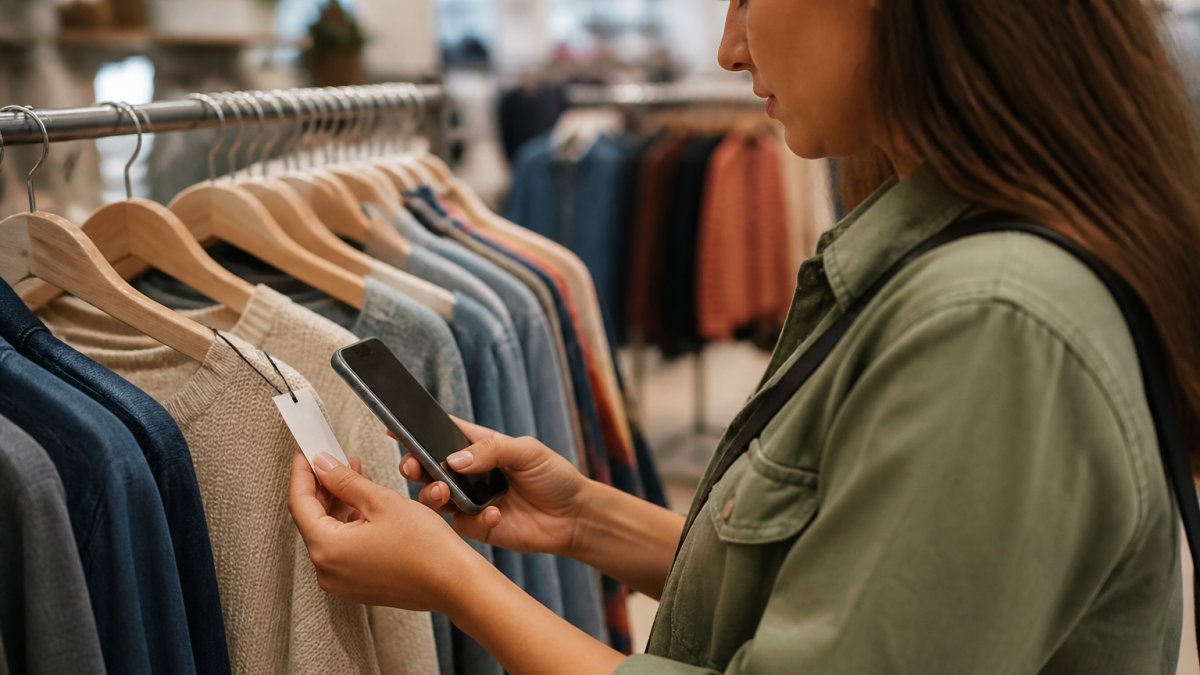
Start with a single behaviour: scan or check before you buy. Over a few months, that one habit reshapes your whole wardrobe, because you stop buying the things you would have regretted. Add a second behaviour once the first is automatic: repair before you replace, and resell or donate before you bin.
Tracking is the part most people skip, and it is the part that keeps the habit alive. When you follow a handful of brands and watch their ratings move, sustainability stops being an abstract ideal and becomes a scoreboard. You can see which brands are improving and which are coasting on reputation. That visibility is what turns a good intention into a standing decision.
Conclusion: Hold Brands Accountable, One Purchase at a Time
The gap between what brands claim and what they can prove is where greenwashing lives. Closing that gap is not a job for regulators alone; it happens every time a shopper checks a claim before paying. That is the challenge, and it is one you can act on today.
Ethical Brand exists to make that check fast. Our mobile app scans barcodes, QR codes, and logos in real time and returns a QVSEE™ rating across Quality, Value, Social, Economic, and Environmental impact, with an evidence trail behind every score. A personal portfolio lets you track your favourite brands and get automatic updates when their rating changes, so accountability is continuous rather than a one-off.
Download Ethical Brand and start holding brands to the standard you already hold yourself to.
Frequently Asked Questions
What makes clothing sustainable?
Sustainable clothing is judged on more than the fabric. It covers how fibres are grown or produced, how much water and energy manufacturing uses, whether workers are paid fairly, and how long the garment lasts. A cotton t-shirt made in a factory with no wastewater treatment is not sustainable, even though cotton can be. Look for brands that publish information on materials, factories, and end-of-life options rather than relying on vague claims like 'eco-friendly'.
How can I tell whether a clothing brand is sustainable?
Start with clothing brand sustainability ratings that score multiple areas rather than a single badge. A credible rating covers environmental impact, labour practices, and supply chain transparency, and shows the evidence behind each score. Check whether the brand names its factories, publishes audit results, and updates ratings when practices change. If a brand only shows a logo with no supporting detail, treat the claim as unverified until you find independent confirmation.
What materials are best for sustainable clothing?
There is no single best fibre. Organic cotton, linen, hemp, Tencel lyocell, and recycled wool all have lower impact than conventional equivalents when produced responsibly, but each has trade-offs in water use, durability, or processing. The bigger factor is how the garment is made and how long you wear it. A well-made recycled polyester jacket worn for a decade beats an organic cotton top worn twice. Check the material alongside the brand's overall rating.
Is sustainable clothing more expensive?
It often costs more upfront because fair wages, cleaner production, and smaller batch sizes carry real costs. However, the price gap narrows when you factor in durability. A £60 shirt worn 200 times costs less per wear than a £15 shirt worn 20 times. You can also buy second-hand, choose timeless styles over trend pieces, and prioritise a few high-impact items like outerwear and shoes where quality matters most.
How can I avoid greenwashing when shopping for clothes?
Ignore vague slogans and look for specifics. Credible brands name their certifications (GOTS, Fair Trade, B Corp), disclose factory locations, and publish progress reports with dates. Watch for claims like 'conscious collection' or 'planet-friendly' with no evidence trail. A clothing brand sustainability rating that scores social and environmental factors separately makes greenwashing harder to hide, because a brand cannot score well on environment while ignoring labour conditions.
What is the difference between ethical and sustainable clothing?
Ethical clothing focuses on people: fair wages, safe working conditions, and no child labour. Sustainable clothing focuses on environmental impact: water use, carbon emissions, chemical inputs, and waste. The two overlap heavily, and most credible rating systems score both. A brand can be ethical but not sustainable (fair wages, toxic dyes) or sustainable but not ethical (low-carbon fabric, exploited workers). Look for ratings that cover both dimensions.